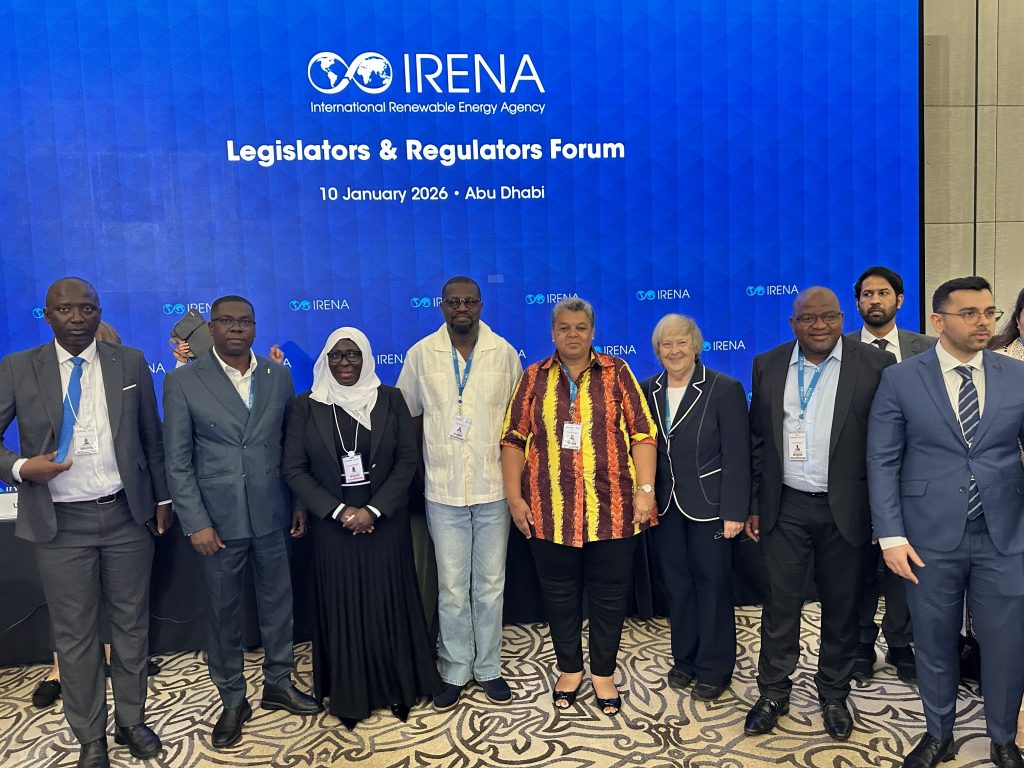
At the 16th IRENA General Assembly Legislators and Regulators Forum in Abu Dhabi, Ghana emerged as a compelling case study in how clear governance, regulatory reform, and political leadership can accelerate renewable energy deployment while safeguarding affordability and public trust.
With support from the Global Renewables Congress, three Members of Parliament from Ghana participated in the Forum, held under the theme “Rethinking the Framework: Powering the Renewable Energy Transition.” The session brought together parliamentarians and regulators from across the world to examine practical ways to reduce investment risk, enhance regulatory certainty, and enable flexible energy markets, while ensuring consumer protection and inclusive growth.
Rebuilding Investor Confidence Through Legal and Procurement Reform

Responding to a question on how Ghana has built investor confidence in its renewable energy sector, the Member of Parliament and Deputy Minister for Works, Housing and Water Resources, Hon. Gizella Tetteh-Agbotui highlighted deliberate legal and policy reforms aimed at restoring credibility and competitiveness.
“In Ghana, we decided to take deliberate steps,” she said. “The first was to amend the Renewable Energy Act, 2011 (Act 832), and subsequently Act 1045 in 2020. The reason was simple: investor confidence had to be strengthened and restored.”
A key shift was Ghana’s move away from fixed administrative feed-in tariffs toward market-responsive pricing mechanisms.
“We transitioned from administrative feed-in tariffs to responsive price mechanisms that reflect actual market conditions, technology costs, and risk profiles,” she explained, noting that this approach improved price discovery and risk allocation.
Equally important were licensing and permitting reforms across the full project lifecycle. “From the siting of plants, to licensing, grid connection, and operation, we simplified and clarified the permit process,” she said. “Clear timelines and defined institutional roles, alongside collaboration between the Energy Commission, PURC, and grid operators, have significantly reduced regulatory uncertainty and transaction costs.”
The Deputy Minister emphasised that political leadership has also played a decisive role. “The new government renamed the Ministry of Energy as the Ministry of Energy and Green Transition. When that statement is made from the highest office of government, it cascades to every agency under the ministry.”
Regulation, Standards, and Finance: Making Renewables Bankable
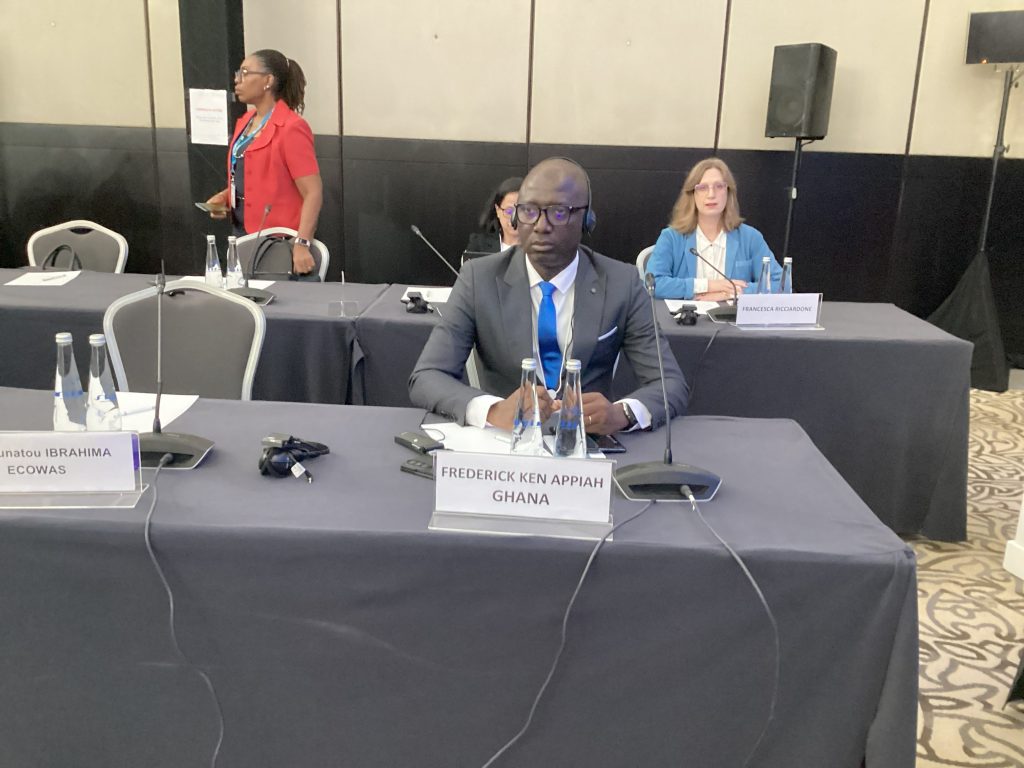
From a regulatory perspective, Ing. Frederick Ken Appiah, Deputy Director of Renewable Energy Regulations at Ghana’s Energy Commission, underscored the central role of strong institutions in turning policy ambition into bankable projects.
“To achieve the global energy transition and climate goals, we must underscore the importance of regulatory frameworks and institutions,” he said. “The Energy Commission sits at a central point. We advise the Minister on policy, regulate licensing and performance standards, and promote renewable energy.”
A recurring challenge, he noted, has been the perception of risk within the financial sector. “Some years ago, financing renewable energy was a major challenge. Financial institutions were putting much higher risk premiums on renewables,” he said.
Ghana’s response has been targeted technical assistance and capacity building. “We support financial institutions to understand the regulations very well, including derisking instruments, competitive procurement frameworks, and net-metering schemes,” he explained.
Crucially, technical standards have helped unlock confidence. “We have adopted almost 200 technical standards covering solar, wind, hydro, and other technologies. This gives financiers confidence that the products they are investing in meet minimum performance standards.”
Innovative financing initiatives including SUNREF, the Green Hydro Fund Facility with Ecobank, the Accelerating Solar Action Programme, and scaling-up renewable energy programmes for mini-grids and net metering, were cited as examples of how regulation and finance can work together to expand access while protecting consumers.
“The lesson for other countries,” Ing. Appiah concluded, “is clear policy targets, clear regulatory frameworks, and strong collaboration with key institutions.”
Parliament’s Role: Fairness, Jobs, and Public Trust

Addressing the social dimension of the transition, Hon. Frank Annoh-Dompreh, Member of Parliament and Minority Chief Whip, stressed that renewable energy policies must be grounded in everyday realities.
“As parliamentarians, we must make renewables about bread-and-butter issues,” he said. “We are voted into office on livelihoods, affordability, and sustainability. If we don’t link renewables to those concerns, we lose public support.”
He praised IRENA for deliberately involving legislators. “This goes beyond executive-to-executive diplomacy. It brings the people’s representatives into the process, and that is commendable.”
Hon. Annoh-Dompreh highlighted Parliament’s role in updating laws to reflect new realities, citing amendments to existing legislation such as the Bui Power Authority Act to explicitly include renewable energy. He also pointed to continuity across political administrations.
“Previous governments introduced policies like the electric vehicle framework to support renewables, and succeeding governments have continued them. That consistency is critical.”
Inclusion of the private sector and rural communities, he noted, remains essential. “We can learn from countries like Kenya, which have taken deliberate steps such as removing import tariffs to encourage private sector participation,” he said.
He also emphasized leadership by example. “The executive has committed that the seat of government will adopt renewable energy. That signal matters as it encourages the private sector to follow.”
Looking globally, Hon. Annoh-Dompreh called for deeper cooperation between North and South. “Africa holds close to 60 percent of the rare minerals used in renewable technologies, while the Global North has much of the technical knowledge. There must be a cross-fertilisation of resources and expertise so that the transition becomes a true win-win for the world.”
A Governance-Led Transition Model

Ghana’s interventions at the 16th IRENA Assembly Legislators and Regulators Forum highlighted a coherent model for renewable energy transition, anchored in legal clarity, credible regulation, market-based procurement, innovative finance, and parliamentary oversight. As countries around the world rethink governance frameworks to accelerate renewables, Ghana’s experience offered timely lessons on how policy certainty, institutional collaboration, and political leadership can translate ambition into impact.
Written by Ramana Shareef