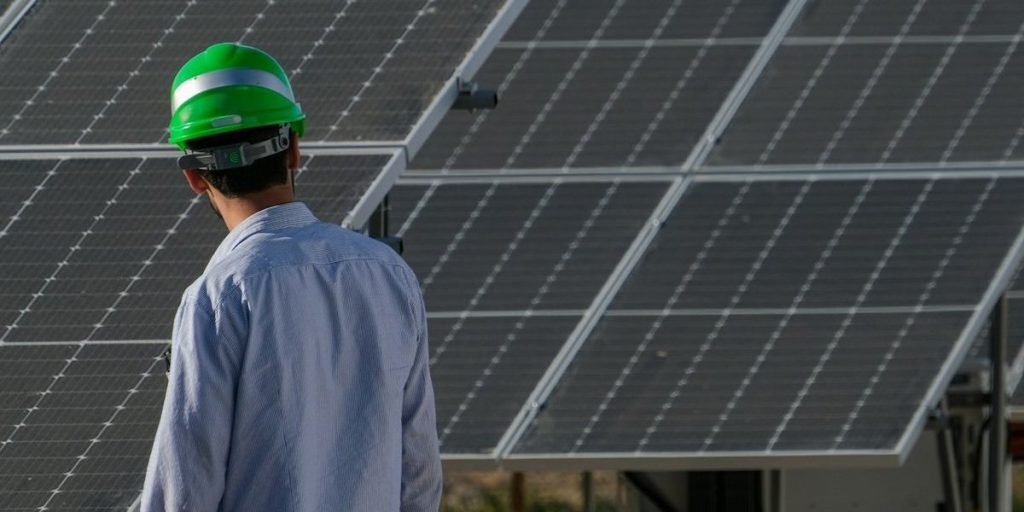
Photo Credit: USA Solarcell, https://usasolarcell.com/news/2025/07/15/pakistans-solar-boom-is-revolutionizing-its-energy-landscape/
At the occasion of the IRENA General Assembly’s Legislators and Regulators Forum, 10-12 January 2026, the Global Renewables Congress (GRC) Secretariat was pleased to support and welcome a high-level delegation from Pakistan comprising Hon. Romina Khurshid Alam, Hon. Shaista Pervaiz, Hon. Zeb Jaffar, and Hamza Haroon of the Climate Vulnerable Forum. GRC’s engagement throughout the Assembly focused on the role of legislative leadership, climate-resilient economic planning, and the urgent need to unlock renewable energy investment in climate-vulnerable countries, with particular attention to Pakistan and Ghana’s rapidly evolving energy landscape.
Ahead of the formal opening of the Assembly, the GRC team and its delegation, took part in the Legislators and Regulators Forum convened under the theme “Rethinking the Framework: Powering the Renewable Energy Transition.” The discussions revealed a growing recognition among legislators that their role extends well beyond lawmaking. Parliamentarians increasingly see themselves as active shapers of energy markets and custodians of the public interest, overseeing regulators and utilities, influencing public budgets, creating demand through government-led electrification, and safeguarding transparency and consumer protection. A recurring message was that policy ambition alone is not enough; it is the quality of implementation, governance, and accountability that ultimately determines whether the energy transition delivers real benefits to citizens.
On 10th January, the GRC team also facilitated an exchange between Parliamentarians and IRENA youth delegates, reflecting a shared understanding that a just and durable transition cannot be achieved without intergenerational collaboration. The depth of engagement, continuing well beyond formal sessions, highlighted a strong appetite for meaningful youth participation in shaping national and global energy pathways.
On the first day of the Assembly, the GRC and the Climate Vulnerable Forum co-hosted a high-level session titled “Legislating for an Equitable Energy Transition: Insights from Climate Prosperity Plans.” Legislators discussed how Climate Prosperity Plans (CPPs) can anchor renewable energy within broader national priorities such as economic growth, competitiveness, and resilience. The conversation emphasized the need to align long-term climate ambition with bankable projects that strengthen communities, build resilience to climate shocks, and enable a renewables-based economy in which citizens are direct beneficiaries. Pakistan emerged as a particularly compelling example, with participants pointing to its citizen-led renewable energy uptake as evidence that grassroots solutions, when supported by the right policy signals, can drive tangible local and national impact.
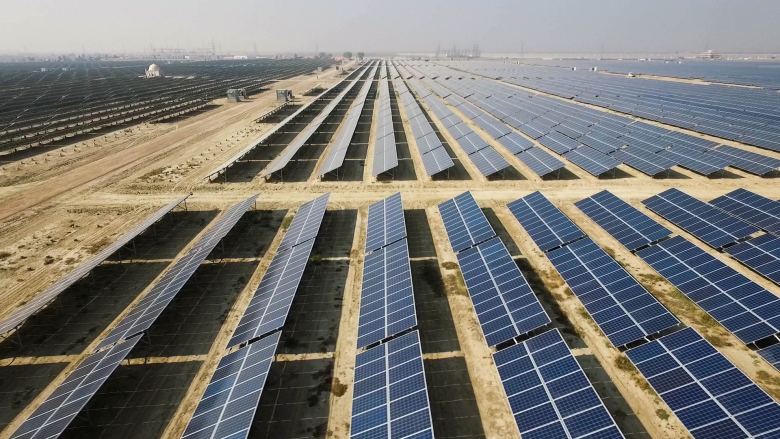
Photo credit: World Bank, “Expanding Renewable Energy in Pakistan’s Electricity Mix”
A central challenge underpinning these discussions was the worsening financial reality facing climate-vulnerable countries. Rather than capital flowing toward those most exposed to climate impacts, capital outflows have intensified. Limited foreign direct investment, declining official development assistance, high borrowing costs, and rising debt burdens have shifted the narrative from “millions to trillions” to what many described as “millions in, billions out.” For countries such as Pakistan and Ghana, these constraints make new energy investments difficult, despite the transformative potential of renewables, particularly solar, to reduce dependence on imported fuels, often among the largest national expenditures. Throughout the Assembly, renewables were repeatedly framed not only as climate solutions, but as macroeconomic stabilizers capable of breaking cycles of resource dependency and fiscal vulnerability.
Hon. Shaista Pervaiz, from the Pakistan Muslim League (N) party, highlighted how Pakistan is advancing energy security and inclusive growth under fiscal constraints, positioning renewable energy as a near-term solution for energy access, sustainable growth, and climate action. Parliament’s role in embedding this transition through laws, budgets, and oversight is critical for public trust. Rapid expansion of rooftop and agri-solar demonstrates the impact of demand-driven policies: In one year, solar panel imports approached 7 GW, fuelled by net metering that lets households and businesses sell excess power back to the grid, lowering costs and improving reliability. Provincial initiatives, such as Punjab’s solarization of 8,000 agricultural tubewells, show how renewables can strengthen both energy security and resilience.
By aligning clean energy with productivity, fiscal stability, and job creation, renewable energy development will create a system-wide transformation. As highlighted throughout the GRC’s engagement at IRENA GA 2026, when renewable energy is embedded within governance and economic strategy, the narrative shifts from vulnerability to investability, and from ambition to implementation.